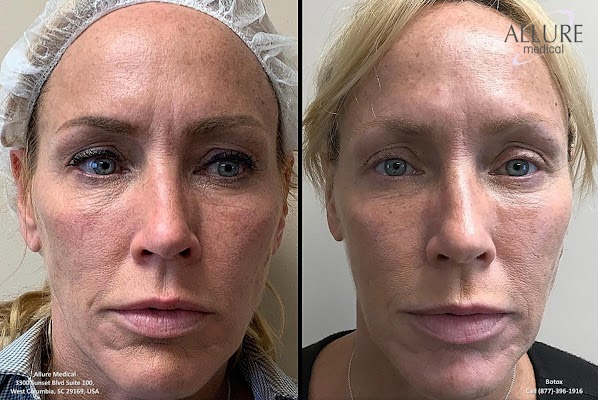
The first hint is subtle. Lipstick begins to feather into vertical lines. Then, in photos, the corners of the mouth look a touch downturned, like the face is carrying a story it didn’t mean to tell. If you’ve noticed softening along the upper lip, creases that deepen when you speak, or folds that shadow the edge of your chin, you’re looking at a blend of skin changes and muscle dynamics. Botox around the mouth, done with restraint and anatomical precision, can lift, soften, and rebalance this area without altering how you talk, smile, or eat.
I’ve worked with patients who only wanted their “smoker’s lines” softened and others aiming to undo that perpetual tired look that sets in with marionette lines and a sagging jawline. Although Botox is famous for forehead lines smoothing and frown line reduction, its quiet superpower lies in strategic relaxation around the mouth and chin. The goal isn’t a frozen smile. The goal is harmony. When muscles stop overpulling, skin looks smoother, filler needs often drop, and expressions read kinder.
Why the mouth ages differently
The mouth region changes faster than many expect because it sits at the intersection of high-motion muscles, thin skin, and early collagen decline. The orbicularis oris, a circular muscle around the mouth, works nonstop for speech, eating, and expressions. Under constant contraction, it etches vertical lip lines and pulls the upper lip inward, flattening lip shape. The depressor anguli oris (DAO) tugging at the mouth corners can exaggerate sadness. The mentalis in the chin, when overactive, creates chin dimpling and a pebbled texture that undermines jawline contouring.
On top of muscle activity, midface volume loss removes support from above. Cheeks descend, deep skin folds near the mouth form, and marionette lines sharpen. Skin tone and elasticity drop with time, making everything a little less buoyant. For some, gum show increases while smiling, for others a sagging upper lip makes teeth disappear. Understanding this anatomy lets us use botox for sagging skin treatment around the mouth with finesse rather than force.
What Botox can and cannot do in the perioral area
Botox works by easing muscle contraction. Better muscle balance translates into gentler lines and, sometimes, a small lift. Around the mouth, dosage and placement are precise. Millimeters matter. This is not the forehead, where you often have a wider canvas. When combined with good technique, you can expect botox for lip line smoothing, botox for vertical lip lines, botox for chin wrinkles, and subtle lift at the corners of the mouth.
However, Botox is not a volume replacement. If your main issue is hollowing or volume loss in cheeks that drags the lower face downward, you’ll likely need filler or biostimulators in tandem. Think of Botox as the tool for muscle-driven wrinkles and downward pull, while fillers or collagen-stimulating treatments address structural support and deep laugh lines caused by depleted tissue rather than overactive muscles. In practice, the most natural outcomes often come from combining botox injections for facial rejuvenation with conservative filler work or energy-based tightening in targeted regions.
Targeted areas around the mouth and how they respond
Upper lip lines, sometimes called barcode lines, form from repetitive puckering, sun exposure, and genetics. Micro-droplet botox for upper lip lines softens the purse-string motion without compromising the ability to sip, speak, or pronounce certain consonants. Expectations matter. Realistic improvement ranges from 20 to 50 percent in etching depth, more if lines are mostly dynamic.
A gummy smile can be tempered with small units placed to reduce excessive upper lip elevation. Done well, the smile stays bright, but gum show drops by a few millimeters. Patients who once avoided full smiles often regain confidence. This is an example of botox for gummy smile correction that preserves spontaneity.
Downturned corners of the mouth are influenced by the DAO. A carefully measured dose can lift the corners just enough to neutralize the expression. This is not botox for non-invasive facelift in the literal sense, but it can mimic a mini-lift effect in expressions, especially when combined with subtle filler support at the marionette line entry point.
Pebbled chin and mentalis over-activity respond beautifully to a couple of units. The result is smoother skin texture, less chin curl, and better definition at the front of the jaw. Consider this a helpful companion to botox for jawline contouring when jowling is mild to moderate.
For the lip shape itself, a conservative lip flip uses small amounts in the upper orbicularis oris to let the red lip roll outward slightly. This gives the look of lip fullness enhancement without adding volume. It can help a sagging upper lip appear better balanced, yet it is not a substitute for filler if substantial lip shaping is desired.

The right patient for perioral Botox
Good candidates show dynamic lines or expressions that read harsher than they feel. If your primary concern is the look of fatigue or sadness from moving muscles, botox for facial expression enhancement is a fit. If your lips are thinning or you have deep, static folds that persist even at rest, Botox alone won’t suffice. Think combined therapy: a small amount of filler, skin quality treatments, and light botox injections for youthful skin often achieve the most natural, modern result.
Age is not a barrier. I treat patients in their 30s for early wrinkle prevention, especially those with aggressive upper lip lines due to smoking or frequent straw use. In the 40s and 50s, muscle relaxation can reverse facial muscle training patterns that deepen lines over time and can improve skin smoothness improvement in motion-heavy zones. For older patients with established folds, we pair treatments to address both the muscle pull and the underlying support.
How long results last and what improvement looks like
Around the mouth, expect results to start in three to five days, with full effect by two weeks. Duration runs around eight to twelve weeks for perioral areas, sometimes longer in the chin and DAO. These muscles move a lot, so a shorter window compared with forehead lines smoothing is normal. If your injector favors a conservative first session, you may return for a small touch-up at the two-week mark to perfect symmetry.
Improvements are subtle but meaningful: lipstick behaves better, the resting expression lightens, and smile lines look less severe in motion. Many patients comment that their makeup applies more smoothly and that the area catches less shadow in photos. For some, this is part of total facial rejuvenation, where we coordinate botox for upper face rejuvenation, eye area rejuvenation, and a hint of cheek lifting to balance the whole face rather than fixating on one zone.
Safety, dosing, and technique matter
The perioral region demands restraint. Too much toxin can flatten your smile or alter speech. An experienced injector will use smaller units diluted precisely, with placements mapped to your unique muscle patterns. I assess how your mouth moves when speaking certain words. That shows which fibers dominate and where to place micro-doses. Left and right sides are rarely identical. Expect asymmetry corrections.
A typical plan might involve tiny aliquots across the upper lip lines, a minimal dose to the DAO for a corner lift, and a touch to the mentalis. We evaluate your gum show and decide whether a gummy smile correction would enhance balance. If jawline slimming is desired, that’s usually a separate session targeting the masseter, which improves facial contouring without surgery for broader lower faces, yet it doesn’t directly lift sagging skin around the mouth. When patients request botox for sagging jawline or botox for face tightening as a single fix, I explain that support and skin quality are often the bigger drivers and likely need combined approaches.
Beyond the mouth: supporting cast that improves perioral outcomes
Nothing sits in isolation on the face. If your brows are heavy and the upper face reads tense, a measured brow lift using botox for lifting eyebrows can brighten the eye area and redistribute attention from the lower face. Smoother crow’s feet with botox for crow’s feet wrinkle treatment and a lighter glabellar frown can make the whole face feel more open, which makes mouth improvements look more complete. Upper face tension often telegraphs stress. Easing it brings coherence.
Cheek support is another unsung hero. Correcting volume loss in cheeks can reduce the downward vector contributing to deep laugh lines and marionette folds. Even subtle cheekbones definition can improve the way the nasolabial region looks. In some cases, we also address the neck, since early banding or laxity at the jaw-neck junction can make lower-face changes less convincing. While botox for neck rejuvenation and neck contouring helps with platysmal banding, skin laxity still benefits from energy-based tightening or collagen stimulators. The neck doesn’t need to look 20 to sharpen the lower face, it just needs to stop pulling attention with cords or etched lines.
When Botox is not the right choice
If your primary complaint is crepey, thinned skin and not muscle-driven lines, Botox won’t rebuild the fabric. That’s when we shift to resurfacing, microneedling with radiofrequency, or biostimulators. If your folds are deep because of significant volume loss, fillers or fat transfer do the heavy lifting. Patients with heavy sun damage or age spots do better with a plan that layers therapies: pigment reduction, collagen remodeling, then light muscle relaxation for polishing. For those who expect a non-surgical facelift result from Botox alone, it’s important to clarify. Botox is superb for muscle relaxation and wrinkle prevention, not a stand-in for structural lifting.
There are also functional considerations. If you rely on precise lip control for professional singing or wind instruments, we might avoid upper lip toxin or use extremely conservative dosing. I screen for dental plans, orthodontic changes, and recent dental work, which can transiently alter bite and muscle use.
Realistic timelines and maintenance
Think of Botox as a rhythm. Most patients return every three to four months for perioral maintenance, often offset from larger treatments like forehead wrinkle removal or crow’s feet care. If you enjoy the lip flip, expect to refresh a bit sooner. Over time, many notice that lines etch less deeply because the skin has more recovery time between contractions. That’s the quiet benefit of botox for wrinkle prevention.
For those managing multiple areas, we set a rotation. For example, one visit focuses on upper face rejuvenation and brow position, the next prioritizes the mouth, chin, and jawline. This approach prevents overtreatment in a single session and respects the way expressions integrate across the face.
What an appointment looks like
Consultation comes first. I watch West Columbia SC botox you talk, smile, sip water, and pronounce labial sounds. I photograph at rest and in motion. We map the most active fibers. Treatment itself is quick. Micro-needles deposit tiny volumes under the skin or into the superficial muscle. Most people describe a sting that fades in seconds. For sensitive areas like the upper lip, a dab of numbing cream helps, though many skip it for speed. Aftercare is simple: keep your head elevated for a few hours, avoid aggressive rubbing or high-heat workouts the same day, and skip facials for a couple of days. Makeup can go on gently after a short window.
At two weeks, we evaluate symmetry and function. If a small area still overpulls, we add a drop. Good perioral work becomes invisible when you speak and smile. The only giveaway is how your lipstick behaves and how your face reads happier.
Integrating Botox with skin quality strategies
Muscles drive movement, but the skin’s texture, tone, and elasticity determine how those movements show up. Paired strategies can change the playing field. Light fractional resurfacing or microneedling can improve fine lines around mouth and lip wrinkles treatment. Skincare with retinoids, peptides, and sunscreen protects the investment. For those prone to glabellar lines and forehead furrows, a stable routine combined with botox for reducing forehead furrows and botox for wrinkle-free forehead can prevent future etching that migrates downward through compensatory facial habits.
Hydration makes a noticeable difference in how upper lip lines look. Smoking and repetitive purse-lip motions deepen them faster. If you tend to drink through straws or clench your jaw, small habit tweaks can prolong results. Dentistry and airway considerations sometimes factor in. Mouth breathing or malocclusion can set muscle patterns that work against cosmetic plans. A quick check-in with your dentist or orthodontist can be worth it if you’re fighting recurring muscle overactivity.
A closer look at trade-offs
Light dosing maintains movement and preserves normal function but may produce gentler improvements, especially in deep vertical lines. Heavier dosing can give a stronger smoothing effect yet risks stiffness. Around the mouth, the conservative path usually wins. Most patients prefer to improve lines by 30 to 50 percent and keep a lively smile rather than chase 80 percent and get a wooden feel.
Duration is another trade-off. Forehead and crow’s feet often last longer because those muscles work less than the perioral complex. Expect a shorter maintenance cycle for lip line smoothing. The upside is control. If you prefer more or less effect next round, dosage and placement can be tuned quickly.
The role of Botox in a broader facial plan
When patients ask about a non-invasive facelift, I explain that Botox is one piece of a facial lifting puzzle. It can relax downward pull, improve skin smoothness, and refine expressions. But lift and contour usually need additional tools: energy devices for skin toning, filler for facial volume restoration, and sometimes thread lifts for modest mechanical support. For severe sagging neck skin or a heavy sagging jawline, surgery remains the gold standard. That said, plenty of patients achieve a softer jawline, reduced jowl emphasis, and improved facial profile with staged, non-surgical plans. Botox simply ensures the muscles are not fighting that plan.
I often combine masseter slimming with conservative chin and DAO work to declutter the lower face. For those with tired-looking eyes, upper eyelid heaviness, or under-eye puffiness, easing brow depressors, smoothing crow’s feet, and improving under-eye circles with a tailored approach helps the mouth changes make sense visually. Faces are stories. Edit one line thoughtfully, and the scene reads differently.
Results you can feel, not just see
The feedback I hear most often after perioral Botox is about how makeup sits and how expressions feel. Patients notice less catching, fewer creases forming across the day, and a general sense of ease around the mouth. Photos signal the shift. At rest, the corners no longer draw down. In motion, lines soften instead of spike. If we’ve layered treatments well, you won’t be able to point to a single change. You’ll just look rested.
There’s also a behavioral benefit. By loosening strong muscle patterns, Botox can subtly retrain expression habits that age the face, a kind of gentle facial muscle training in reverse. If you’re a chronic lip pursing or chin tensing person, the softened feedback helps break the cycle. That’s part of why results can compound over time.
Frequently asked judgment calls from the chair
Do I need filler with this? If you can pinch a deep fold at rest or if your lip is structurally thin, probably yes. If your lines only appear with puckering, Botox alone may do enough.
Will it change how I speak? With proper dosing, speech remains natural. Overdose risks softening certain consonants temporarily. That’s why expertise matters and why a conservative start is wise.
Can Botox help acne scars or age spots around the mouth? Not directly. Botox doesn’t resurface or lift pigment. It can make the area move less, so treatments for acne scars or age spots heal without constant folding, but you’ll want resurfacing, peels, or pigment-focused lasers to address those concerns.
What about forehead lines vs crow’s feet, which should I treat first to make my mouth look better? For balance, start where your expressions look the most tense. If the upper face reads angry or tired, softening the frown and smoothing crow’s feet can make mouth changes feel more integrated. If your main complaint is lipstick bleed and downturned corners, start with the mouth and chin, then add the upper face later.
Is there a role for Botox for underarm sweat reduction in a facial plan? Indirectly, yes. If you’re doing a special event plan and sweat is a concern, underarm Botox can improve comfort and wardrobe choices, but it doesn’t change facial outcomes. Still, comprehensive confidence sometimes hinges on these practical, high-impact tweaks.
A roadmap for a mouth area makeover
If your goal is a softer, lifted mouth zone without surgery, plan in stages. Begin with a conservative round of botox for sagging skin around mouth to test your muscle response. Add minimal filler only where structure is missing or where folds resist movement-based smoothing. Reassess in two weeks, then again at three months. Once dynamics settle, consider skin quality upgrades for longer-term gains in smooth skin texture and skin elasticity improvement. For some, a touch of brow balancing or crow’s feet smoothing completes the picture. For others, subtle cheek support reduces the workload on the lower face.
Over time, adjust. Life changes, dental work, stress, sleep patterns, and even new exercise habits alter how the face moves. The best results come from watching those shifts and calibrating the plan accordingly.
A brief, practical comparison of options
- Botox around the mouth: Best for dynamic lines, downturned corners, chin dimpling, gummy smile. Quick procedure, results in days, maintenance every few months. Minimal downtime, high precision required. Fillers for marionette lines and perioral support: Best for etched folds and volume loss. Immediate structural change, risk of overfilling if used to chase every line. Combine with light Botox for balanced results. Energy-based tightening or biostimulators: Best for mild laxity and skin restoration. Results build over months. Pairs well with Botox for facial lifting optics without surgery. Surgical lift: Best for significant sagging neck skin and deep jowls. Durable, comprehensive change. Downtime and cost higher, but unmatched for extensive laxity.
Final thoughts from the treatment room
A mouth area makeover rarely hinges on a single syringe or a single vial. Skillful botox injections for facial rejuvenation, placed with respect for how you speak and smile, can transform the feel of your lower face. When the orbicularis oris stops bunching, when the DAO releases its tug, and when the mentalis softens its grip, the skin can finally behave. That sets the stage for subtle sculpting and, if needed, for judicious volume restoration. The result is not a different face, it’s your face with the weight taken off.
If sagging skin around the mouth has crept into your daily mirror checks, consider starting with a conservative perioral Botox plan. Let the muscles relax their hold. Then, add only what’s needed around it. Precision beats excess in this zone. Done right, the change is measured not in millimeters alone, but in how naturally your expressions land.